
Pool Filter Sand Replacement in Central Florida
Premium Pool Filter Sand Replacement for Homeowners Across Central Florida

Fresh Sand for a Filter That Works Like New
Expert Pool Filter Sand Replacement
The sand in your filter does the real work of keeping your pool clear. New sand has sharp edges that grab dirt as water passes through. Over the years, those edges wear smooth, and the sand stops catching the fine particles that make water look dull. When cleaning and backwashing no longer bring your filter back, it’s time for fresh sand.
Our pool filter sand replacement service handles the whole job. First, we shut off the pump and release the pressure. Next, we remove all the old sand and inspect the inside of the tank, including the laterals at the bottom that hold the sand in. Then we add the right grade and amount of pool filter sand for your filter model and flush out the fine dust before the filter goes back into service. We also check the valve gasket and seals while it’s apart.
Before any work, you get a clear quote. After the change, we record the new clean pressure on your gauge, so you and your tech know exactly when the filter needs attention.
We service Hayward, Pentair, Jandy and Zodiac sand filters across Central Florida. Fill out the form for a free pool filter sand replacement quote. We’ll let you know honestly whether you need new sand or a good cleaning. Many sand filters only need a deep clean, and we’d rather save you the cost of a full change when it isn’t needed.
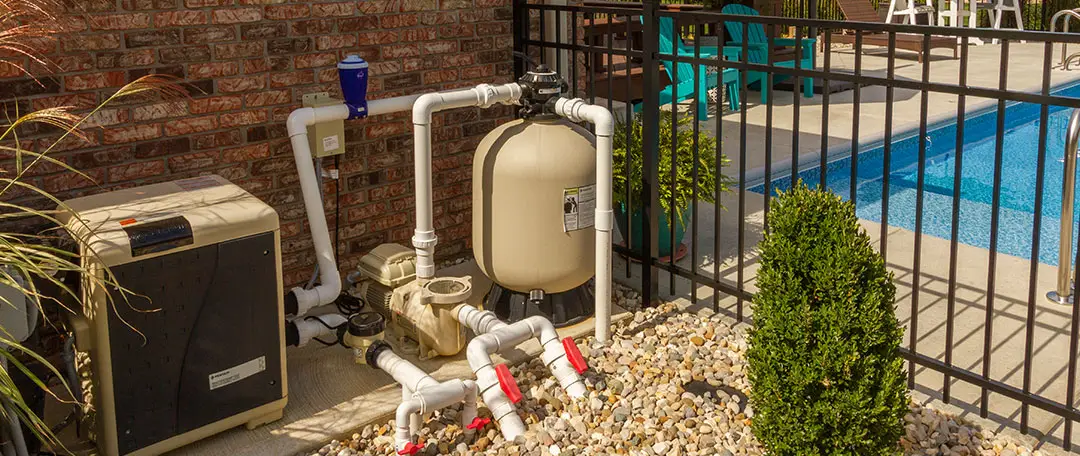




Is It Time to Replace Sand in Your Pool Filter?
Filter sand lasts a long time, often five to 15 years, but it doesn’t last forever. Signs your sand may be spent include:
- Cloudy or dull water that won’t clear, even with balanced chemistry
- Filter runs that get shorter and shorter between backwashes
- High pressure that a thorough cleaning doesn’t fix
- A sand bed that has clumped into a hard mass or formed channels
- Sand that feels smooth and rounded instead of sharp and gritty
Try a deep clean first. Often our filter cleaning service can restore a tired sand bed, and it costs less. However, if the sand has worn smooth or packed into a solid mass, only a full change will fix it.
Why Old Filter Sand Stops Working
Fresh sand grains have sharp, jagged edges. As water flows through, dirt sticks to those edges, and the spaces between grains get smaller. That lets the filter catch finer and finer particles as each run goes on. Over time, the grains wear smooth, and they lose that grip. The filter still moves water, but it lets more dirt pass through.
Other things wear out a sand bed too. Flocculants and some clarifiers can glue the sand together over the years, forming a solid mass with poor filtering. Hard water and heavy organic loads can cut channels through the bed, so water slips past the sand instead of through it. Once that happens, a full sand change is usually the answer.
What Kind of Sand Goes in a Pool Filter?
Pool filters need a specific kind of sand. The standard is #20 silica sand, a hard, sharp, uniformly graded sand made for filtration. Its grains measure about 0.35 to 0.56 millimeters. It catches particles in the 25 to 100 micron range. Play sand, masonry sand and other types are the wrong size and shape. Using the wrong sand can lead to poor water quality, sand blowing into the pool or even filter failure.
Alternatives to Silica Sand
Some owners choose a different media. Zeolite is a porous volcanic mineral that can take the place of sand and catch particles as small as five microns. Crushed garnet is another option. Still, #20 silica sand remains the most common choice. We’ll help you decide which media fits your filter and your goals.
How Much Sand Does Your Pool Filter Need?
Every sand filter model has its own sand spec, and the manufacturer lists exactly how much goes in. We follow that number. It matters because the filter needs open space above the sand, called freeboard. That space is usually about half the depth of the sand bed, and it lets the sand lift and loosen during backwash.
Too much sand shrinks the freeboard. Backwashes then take longer, and sand can wash out the waste line. Too little sand leaves a thin bed that filters poorly. Either way, the fix is the right amount of the right sand, which is part of every change we do.
How We Change the Sand in a Pool Filter
Every pool filter sand replacement follows the same steps:
- Turning off the pump and opening the air relief valve to release pressure
- Removing the valve or lid and taking out all of the old sand
- Inspecting the laterals, standpipe and tank for cracks or damage
- Adding the correct grade and amount of new sand for your filter model
- Reassembling the filter and checking the seals
- Running a series of backwashes to flush out fine dust from the new sand
- Recording the new clean pressure on your gauge
That flush at the end matters. New sand carries a small amount of fine dust. If it stays in the filter, oils stick to it and form mud balls early. A few start-up backwashes clear it out.
Checking the Laterals While the Tank Is Empty
The laterals are the slotted pipes at the bottom of the tank. Their slots let water through but hold the sand back. They’re hidden under the sand most of the time, so a sand change is the perfect chance to inspect them. A cracked lateral sends sand into the pool, which is why we check each one. If we find damage, our pool filter repair team can replace the laterals on the same visit.
We also look at the distributor, the piece at the top of the tank that spreads incoming water across the sand. A damaged distributor or air strainer can blow sand out the waste line during backwash. Catching these problems while the tank is open saves you a second visit and a second batch of sand.
Getting the Most From Your New Sand
Fresh sand works best when the rest of the system helps it. Backwash when the pressure rises about 8 to 10 psi above the clean reading you recorded after the change, instead of on a fixed calendar. Keep chemicals feeding after the filter, since chlorine or acid fed before it shortens filter runs. Also, go easy on flocculants and clarifiers, because over time they can glue the sand together.
Keeping your water balanced protects the sand too. Scale-forming water with high pH, alkalinity and calcium can cement grains together. A steady weekly routine keeps the bed loose and working, so your new sand lasts as long as possible. In Central Florida, where pollen, storms and heavy summer use load up filters fast, that routine makes a real difference.
Can You Change Pool Filter Sand Yourself?
Changing sand in pool filter tanks is a heavy, dusty job, but some handy owners do it. It means removing hundreds of pounds of wet sand, protecting the laterals, adding the exact amount of the right sand and flushing the fines. Safety comes first, too. A sand filter holds water under pressure, so always turn off the pump and open the air bleed before loosening any clamp or valve. Otherwise, parts can separate violently and cause serious injury.
Pool Filter Sand Replacement Cost
Pool filter sand replacement cost depends mainly on your filter’s size, since bigger tanks need more sand and more labor. Choosing an alternative media like zeolite changes the price. Replacing broken laterals or a worn valve gasket during the change adds to the total. We look at your filter first and give you a clear price before we start.
Why Central Florida Homeowners Choose Sunwave
Sunwave is a family-owned Central Florida company with a licensed team. We use the right sand in the right amount, we check the parts you can’t see and you get a price before any work begins. There are no long-term contracts. Plus, our weekly pool service photographs your pressure gauge every visit, so we know when your filter starts to struggle. If the whole filter is worn out, our pool filter replacement team can help. See all of our specialty pool services.
Schedule Your Pool Filter Sand Replacement Today
When you need to replace sand in pool filter tanks, we’re here to help. It’s all part of our pool service in Central Florida. Fill out the form or call (689) 312-9063 to get your filter working like new again.
Our Service Areas
We serve homes across Seminole County and Orange County, including Sanford, Lake Mary, Oviedo, Winter Springs, Orlando, Winter Park and Windermere. See every community in our service area.
Pool Filter Sand Replacement FAQs for Central Florida Homeowners
Here are the sand filter questions Central Florida homeowners ask us most. Still have a question? Give us a call at (689) 312-9063.
You can change the sand in your pool filter yourself if you're comfortable with heavy, careful work. You'll remove all the old sand, protect the laterals, add the exact amount of #20 silica sand and backwash out the fines. Always turn off the pump and release the pressure first. Many owners hire a pro to avoid lateral damage.
You should change the sand in a pool filter when it stops filtering well, which is often every five to 15 years. How long it lasts depends on the dirt load, water hardness and how well it's cleaned. If water stays dull and cleaning doesn't help, the grains have likely worn smooth. We can check it for you.
Yes, you really do need to change the sand in a pool filter eventually. The sharp edges on new sand grains are what trap dirt, and they wear smooth over the years. Old sand still moves water but lets more dirt through. Sand that has clumped or channeled also filters poorly. A full change restores performance.
The amount of sand you need to replace your pool filter depends on your filter model. The manufacturer lists the exact amount on the filter label or in the manual. Following it leaves the right space above the sand for backwashing. Adding too much or too little hurts filtering, so check the spec before buying bags.
The best way to remove sand from a pool filter is to shut off the pump, release the pressure, drain the tank and remove the valve or lid. Then scoop or vacuum out the wet sand carefully, working around the laterals so they don't crack. Cover the standpipe opening so sand can't fall into it.
You should replace all the sand when the whole bed is worn, clumped or channeled. Adding more sand on top of old sand doesn't fix worn grains below, and it can shrink the space above the bed that backwashing needs. If only the top layer is dirty, a deep cleaning or top-layer refresh may be enough.
You can use sand or zeolite in a sand filter. #20 silica sand is the most common choice and costs less. Zeolite is a porous volcanic mineral that can catch finer particles, down to about five microns, and makers say it also absorbs ammonia. Follow your filter maker's guidance on how much to add.
Sand coming into your pool after a sand change usually means a lateral cracked during the job. The laterals hold the sand back, so a small crack lets sand pass through to the pool. The wrong size sand or a backwash rate that's too high can also push sand out. Turn off the pump and have the laterals checked.
Your pool may be cloudy after a sand change because fine dust from the new sand made it into the water. New sand carries some fines, and a series of backwashes at start-up flushes them out. Backwash a few more times, then let the filter run. If cloudiness stays, check the water balance and the laterals.
Yes, you replace zeolite media much like sand. Shut off the pump, release the pressure, remove the old media and inspect the laterals. Add the amount your filter maker lists for zeolite, which can differ from sand by weight. Backwash at start-up to clear fines, then record the new clean pressure.