
Pool Heater Installation in Central Florida
Premium Pool Heater Installation for Homeowners Across Central Florida

Pool Heater Installation Sized for Your Pool
Expert Pool Heater Installation for Heat Pumps and Gas Heaters
Central Florida pools are warm most of the year, but cool fronts from late fall into early spring can make the water too chilly for most swimmers. A heater stretches your swim season. It also keeps the pool comfortable when the kids want to swim on a cool evening. The key is picking the right heater and installing it the right way.
Our pool heater installation service starts with your pool and your plans. First, we look at your pool size, your equipment pad and the power or gas you have. Next, we talk about how you use the pool, whether that’s a few warm weekends or steady heat all winter. Then we explain your options, including heat pumps and gas heaters, in plain English.
Once you choose, we give you a clear quote before any work. On install day, we set the heater on a proper pad, plumb it in the right spot, connect the controls and test it. Before we leave, we make sure it runs, heats and shuts off the way it should. Then we show you how to use it.
We install Hayward, Pentair, Jandy and Zodiac heaters across Central Florida. Whether you need pool heat pump installation or a new gas heater, fill out the form for a free pool heater installation quote. We’ll help you choose the heater that fits your pool, your budget and the way your family swims.
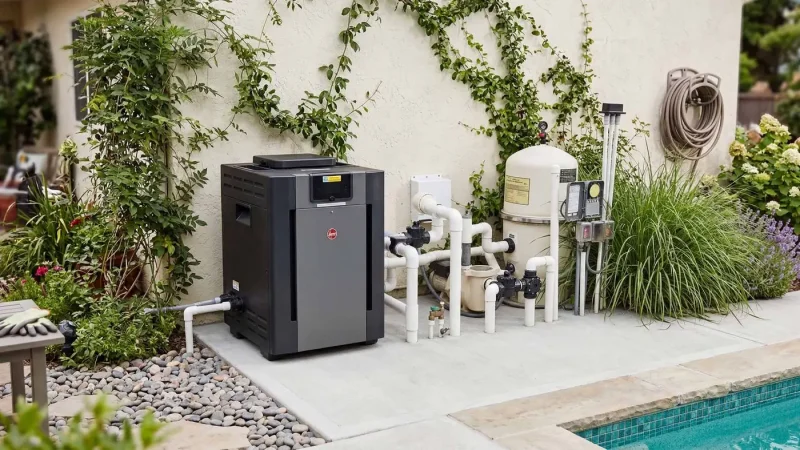




Heat Pump vs Gas Pool Heater: Which Is Right for You?
Most Central Florida homeowners choose between a heat pump and a gas heater. Both work well, but they fit different needs. Here’s how they compare.
Heat Pump Pool Heaters
A heat pump pulls heat out of the outside air and moves it into your pool, a lot like an air conditioner running in reverse. Its only running costs are the electricity for the compressor and the fan. As a result, it’s very efficient, often putting out three to eight times more heat than the electricity it uses.
The trade-off is that a heat pump depends on the weather. The colder the air, the less heat it can pull. Central Florida stays mild most of the year. That’s why heat pumps are a popular choice here for keeping a pool warm over the long cool season. Models with scroll compressors tend to heat better in cooler air and run quieter.
Gas Pool Heaters: Natural Gas and Propane
A gas heater burns natural gas or propane to heat water fast, no matter the air temperature. That makes it a great fit when you heat the pool only now and then, want the water warm in a few hours or have a spa that needs quick heat. On the other hand, gas costs more to run per hour, so steady heating all winter adds up.
If your home doesn’t have natural gas, propane is the usual option. Keep in mind that propane is heavier than air. It can collect in the heater if it doesn’t light, which is one reason gas heaters need professional installation.
Solar and Electric Resistance Heaters
Solar panels can add free heat on sunny days, and they work best as the first stage of heating with another heater backing them up. Electric resistance heaters, on the other hand, cost a lot to run and heat slowly. For that reason, they’re mostly used on small spas. For most Central Florida pools, a heat pump or gas heater is the better fit.
What Size Pool Heater Do I Need?
A heater that’s too small takes a long time to warm the water. A heater that’s too big costs more to buy and install than you need to spend. So sizing matters.
Figuring Out BTUs
It takes about 8.33 BTUs to raise one gallon of water by one degree. To find the heat needed, multiply your pool’s gallons by 8.33, then by the number of degrees you want to raise it. For example, raising a 20,000-gallon pool by 10°F takes about 1,666,000 BTUs. Divide that by the heater’s hourly output, and you get a rough heat-up time before any heat loss.
Why Surface Area Matters
That formula covers the first warm-up. After that, the heater’s job is replacing the heat your pool loses through its surface, mostly through evaporation. For steady heating, surface area matters most. For heating now and then, water volume matters most. We look at both, plus wind and shade around your pool, when we size a heater.
How We Install Your Pool Heater
A heater is only as good as its installation. The details below protect your family, your equipment and the heater’s warranty.
Placement and Clearances
Every heater sits on a level, non-combustible pad, such as concrete. We follow the maker’s clearance rules, since heaters give off heat and need open air around them. Heaters must also sit at least five feet from the inside wall of a spa unless a wall or fence separates them. In windy spots, a gas heater needs space from nearby walls or a wind block. We also place the controls where kids can’t reach them.
Plumbing and Controls
The heater goes after the pump and filter and before any chlorinator or salt cell. A check valve keeps chemicals from flowing back into the heater, where they would corrode the copper parts inside. If your pump runs on a timer, we add a fireman switch, which shuts the heater off a few minutes before the pump stops. We also match the heater to your pump’s flow, because too much flow from an oversized pump can cause problems too. Our pool pump replacement team can help if your pump needs an upgrade.
Pool Heat Pump Installation: What to Expect
Pool heat pump installation has a few extra steps. A heat pump needs its own electrical circuit, sized to the model you choose, so we check your panel before we order anything. It also needs plenty of open air around it. The fan pulls air through the coil, so a heat pump boxed in by walls or tucked under a deck can’t breathe.
We also think about noise and runoff. A heat pump makes a steady fan sound, so we avoid placing it right under a bedroom window when we can. It also drips water from its coil while it runs, which is normal. We set it so that water drains away from the pad and the house.
Our Pool Heater Installation Process
Every pool heater installation follows the same steps:
- Measuring your pool and checking your pad, power and gas supply
- Sizing the heater and explaining heat pump and gas options
- Giving you a clear quote before any work
- Setting the heater on a level pad with the right clearances
- Plumbing it after the filter, with a check valve and bypass as needed
- Connecting the power or gas, the controls and the fireman switch
- Starting the heater, checking for leaks and confirming it heats and shuts off properly
- Showing you how to set the temperature and schedule
Before your heater starts, your water should be balanced. Low pH eats away at the copper inside heaters, which is one more reason our weekly pool service keeps a close eye on your water.
Ways to Cut Your Pool Heating Costs
Evaporation causes about half of all pool heat loss. That’s why a pool cover is the single best way to save on heating. According to the Department of Energy’s page on swimming pool covers, a cover can cut heating costs by 50% to 70%. Blocking the wind around your pool with a fence, hedge or screen helps too, because wind speeds up evaporation.
It also helps to heat only when you’ll swim. For example, a heat pump can hold a steady temperature through the cool season, while a gas heater can warm the pool quickly for a weekend. We’ll help you set a schedule that fits how you use your pool.
Pool Heater Replacement
Not every heater problem calls for a new heater. A bad igniter, pressure switch or thermostat can usually be fixed, and our pool heater repair team handles those. However, a badly corroded heat exchanger, a rusted-out cabinet or a failed heat pump compressor usually points to pool heater replacement. When you replace, it’s a good time to rethink the type of heater. Many owners switch from gas to a heat pump, or add a heat pump and keep gas for quick spa heat.
Pool Heater Installation Cost
Pool heater installation cost depends on the heater type and size, and on what your pad needs. A straight swap for the same type of heater costs less. A new gas line, a longer propane run, a new electrical circuit for a heat pump or a new pad adds to the price. Heat pumps usually cost more up front than gas heaters but less to run over a long season. We always give you a clear price before we start.
Why Central Florida Homeowners Choose Sunwave
Sunwave is a family-owned Central Florida company with a licensed team. We size your heater to your pool instead of upselling the biggest model, and you get a price before any work begins. There are no long-term contracts. Plus, one company can handle your heater, your pump, your filter and your weekly cleaning, so everything works together. If you’re replacing more than one piece of equipment, see our pool equipment installation services.
Schedule Your Pool Heater Installation Today
Pool heater installation is part of our pool service in Central Florida. Fill out the form or call (689) 312-9063 to start swimming in warm water on cool days.
Our Service Areas
We serve homes across Seminole County and Orange County, including Sanford, Lake Mary, Oviedo, Winter Springs, Orlando, Winter Park and Windermere. See every community in our service area.
Pool Heater Installation FAQs for Central Florida Homeowners
Here are the pool heater installation questions Central Florida homeowners ask us most. Still deciding? Give us a call at (689) 312-9063.
The cost to add a heater to an existing pool depends on the heater type, its size and what your equipment pad needs. A heat pump may need a new electrical circuit, and a gas heater may need a gas line or propane tank. A new pad adds cost too. We look at your setup and give you a clear quote before any work.
You can install some parts of a pool heater yourself, but most homeowners shouldn't. Gas heaters need safe gas connections, and propane can collect and ignite if something goes wrong. Heat pumps need a properly sized electrical circuit. Every heater also needs the right pad, clearances and plumbing order. A licensed pro handles all of that safely and protects your warranty.
To heat a 20,000 gallon pool, you need about 166,600 BTUs for every degree you raise it. That comes from 20,000 gallons times 8.33 BTUs per gallon per degree. A 10°F rise takes about 1,666,000 BTUs. That's the first warm-up only, since keeping the pool warm depends mostly on surface area, wind and whether you use a cover.
How long it takes a heat pump to heat a 10,000 gallon pool depends on the heater's output, the air temperature and how much heat the pool loses. Start with the math: 10,000 gallons times 8.33 times the degrees of rise, divided by the heater's BTU output per hour. A cover and mild air shorten the time a lot.
The most inexpensive way to heat a pool is to stop losing heat first. A pool cover cuts evaporation, which causes about half of all heat loss, and can lower heating costs by 50% to 70%. Blocking wind helps too. After that, a heat pump is usually the cheapest heater to run in Central Florida's mild climate.
Your existing wiring and breaker may not be enough to add a pool heat pump. Heat pumps usually need their own dedicated circuit sized to the model's requirements, and many older pads were wired only for a pump and lights. A licensed electrician checks your panel, breaker and wire size before installation. We'll tell you up front if your pad needs electrical work.
The pump, filter, heater and salt cell should go in that order: pump, then filter, then heater, then the salt cell or any other chlorinator. Putting the heater before the chlorinator keeps concentrated chlorine from flowing through it and corroding the copper inside. A check valve between the heater and the chlorinator adds more protection.
A pool heat pump often needs a bypass in the plumbing when your pump moves more water than the heater is rated for. The bypass lets extra flow go around the heater and makes service easier. Too much flow through a heater can cause problems, so we check your pump's flow against the heater's specs and add a bypass when needed.
You should realistically expect a pool heat pump in Florida to keep your water comfortable through most of the cool season at a low running cost. It heats slowly, so it works best running steadily with a cover on. On the coldest nights it makes less heat, since colder air holds less heat to pull from. Plan ahead for cold snaps.
You should pick a heat pump if you want steady, low-cost heat over a long season, and a gas heater if you want fast heat now and then or heat a spa often. Heat pumps cost more up front but less to run. Gas heats quickly in any weather. Some owners install both and use each for its strength.