
Pool Pump Replacement and Installation in Central Florida
Premium Pool Pump Replacement for Homeowners Across Central Florida

Pool Pump Replacement Done Right the First Time
Expert Pool Pump Replacement and Installation
Your pool pump runs more than any other piece of equipment you own. In Central Florida, where pools stay open all year, that adds up to a lot of hours and a big share of your power bill. So when your pump finally wears out, the new one should fit your pool, move the right amount of water and cost less to run.
Our pool pump replacement service starts with your pool instead of a catalog. First, we look at your plumbing, your filter and your drain covers. Next, we measure how hard your current pump is working, so we can match a new pump to the job. Then we explain your options, including a variable speed pool pump, in plain English.
Once you pick a pump, we give you a clear quote before any work. On install day, we set the pump, connect the plumbing and wiring, program the speeds and check pressure and flow. That last step matters, because a pump that pulls too hard can create a drain entrapment risk.
We install Hayward, Pentair, Jandy and Zodiac pumps across Central Florida. Whether you need a straight swap or an upgrade to variable speed, fill out the form for a free pool pump replacement quote. We’ll give you honest advice on what your pool actually needs, even if that means a smaller pump than you expected. Most homeowners are surprised by how quiet a new variable speed pump is compared to the old one.
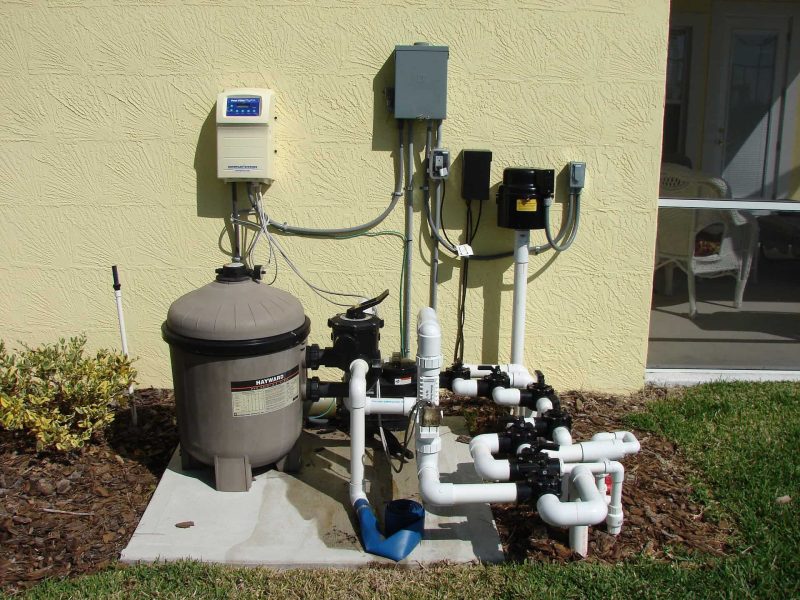




When Is It Time for a New Pool Pump?
Not every pump problem calls for a new pump. A bad capacitor, a leaking seal or worn bearings can usually be fixed, and our pool pump repair team handles those every week. However, some problems make replacement the smarter choice.
A cracked pump housing, a burned-out motor on an older pump or several parts failing at once usually point to a new pump. The same goes for an old single speed pump that runs for hours every day. In that case, the power savings from a newer pump can make replacement worth it even before the old one quits. We’ll give you an honest look at both options before you spend a dollar.
Replace the Whole Pump or Just the Motor?
Pool pump motor replacement can make sense when the wet end of the pump is in good shape. That includes the housing, the impeller and the seal plate. In that case, a new motor brings the pump back to life for less money.
There’s a catch, though. The new motor has to match the old one’s total horsepower, which is the nameplate horsepower times the service factor. A bigger motor may sound like an upgrade, but it raises the risk of suction entrapment at the drain. A smaller motor may not move enough water. Because of that, we always check the nameplate before ordering parts. Snap a photo of yours and keep it with your pool records, too.
When the housing is cracked, the impeller is worn or the pump is old and inefficient, replacing the whole pump is usually the better value. It also gives you a chance to move to variable speed.
Variable Speed Pool Pump vs Single Speed and 2-Speed
A single speed pump runs at full speed every minute it’s on. A 2-speed pump adds a low setting. Meanwhile, a variable speed pool pump lets you set exactly how fast it runs, from a slow crawl to full power.
How a Variable Speed Pool Pump Saves Energy
Pump energy drops fast as speed drops. As ENERGY STAR’s pool pump guide explains, running a pump at half speed uses only about one-eighth of the energy. So a variable speed pump can run longer at a low speed, keep the water filtered and still use far less power. Many owners run it low overnight and turn it up for vacuuming, cleaning or a spa.
Are There Downsides to Variable Speed?
Variable speed pumps cost more up front. They also have more electronics, so programming matters. A variable speed pump set to run full speed all day saves nothing. Also, some older setups need a little extra work, such as new wiring or a change to how the pump connects to the timer. We set the speeds for your pool and show you how to change them.
There’s a comfort bonus, too. At low speed, a variable speed pump is much quieter than a single speed pump, which matters when the equipment pad sits near a bedroom window or a lanai.
What Size Pool Pump Do I Need?
The right pump is the one that moves the right amount of water through your system. Horsepower alone doesn’t tell you that. Every pool has its own plumbing, filter and fittings, and all of them add resistance. Pros call that total resistance total dynamic head. As a result, the same pump can move very different amounts of water on two different pools.
Why Bigger Isn't Better
A bigger pump on an existing system can push water faster than your drain covers, filter and pipes can safely handle. That can wear parts faster and raise the risk of entrapment at the drain. Pool Safely explains why drain safety matters so much for families. So we size a new pump to your system instead of the biggest number on the box.
Turnover: How Much Water Your Pump Needs to Move
Turnover is the time it takes to run your whole pool volume through the filter once. To find it, divide your pool’s gallons by the pump’s flow in gallons per minute, then divide by 60. One turnover filters about 63% of the water, and each extra turnover catches more of what’s left. We use your pool’s volume and your system’s resistance to pick a pump and speed settings that keep the water clean without wasting power.
Run time is a balance. Hot summer weather, heavy swimming and afternoon storms that wash debris into the pool all call for more filtering. Cooler months usually need less. With a variable speed pump, we can set a longer, slower schedule in summer and trim it back in winter, so you only pay for the filtering your pool needs.
Our Pool Pump Installation Process
Every pool pump installation follows the same steps:
- Reading your current pump’s nameplate and measuring pressure and vacuum
- Checking your plumbing, filter and drain covers to size the new pump
- Giving you a clear quote before any work
- Shutting off power and removing the old pump
- Setting the new pump level and secure on the pad, with new unions and fittings as needed
- Connecting the wiring to match your power supply
- Priming the pump, programming the speeds and checking for leaks
- Measuring pressure and flow again to confirm the system runs safely
If you’d like your new pump to talk to your phone or a control panel, our pool automation team can set that up too.
Getting the Install Details Right
Small details decide how long a new pump lasts. For example, a pump that sits above the water level has to be self-priming, so it can pull water up and push out air on its own. Most home pool pumps work this way. The wiring also has to match the power at your pad, because most pool motors can run on 115 or 230 volts, and the motor has to be set for the right one.
Placement matters in Florida, too. Pool motors cool themselves with outside air and handle air up to 122°F, so a tight enclosure in full sun can overheat them. A vented shade cover helps. If your pad floods in summer storms, we raise the pump. We also keep sprinklers off the equipment and chemicals away from the motor, since fumes corrode it over time.
Pool Pump Replacement Cost
Pool pump replacement cost depends on the type of pump, the size of your system and how much work the install takes. A straight swap with the same plumbing costs less. A variable speed pool pump costs more up front but usually costs less to run. New wiring, plumbing changes or a pad rebuild add to the price. Labor, fittings, programming and the final flow check are all part of the job. We always give you a clear price before we start.
Should You Replace a Pool Pump Yourself?
Some handy homeowners do replace their own pumps, but it’s more than swapping a box. The wiring has to meet code, and licensed professionals should handle pool motor work. The plumbing has to seal without air leaks. Finally, the new pump has to be sized and set so it doesn’t pull too hard on your drains. A pro install covers all of that and leaves you with a pump that’s programmed and tested.
Why Central Florida Homeowners Choose Sunwave
Sunwave is a family-owned Central Florida company with a licensed team. We size your pump to your pool instead of upselling the biggest model, and you get a price before any work begins. There are no long-term contracts. Plus, one company can handle your pump, your filter, your heater and your weekly cleaning, so your whole system works together. If you’re replacing more than one piece of equipment, see our pool equipment installation services.
Schedule Your Pool Pump Replacement Today
Pool pump installation is part of our pool service in Central Florida. Fill out the form or call (689) 312-9063 to get a quiet, efficient pump running on your pool.
Our Service Areas
We serve homes across Seminole County and Orange County, including Sanford, Lake Mary, Oviedo, Winter Springs, Orlando, Winter Park and Windermere. See every community in our service area.
Pool Pump Replacement FAQs for Central Florida Homeowners
Here are the pool pump replacement questions Central Florida homeowners ask us most. Still deciding? Give us a call at (689) 312-9063.
The cost to replace a pool pump depends on the pump type, your system and the install work. A straight swap with matching plumbing costs the least. A variable speed pump costs more up front but usually less to run. New wiring, plumbing changes or a pad rebuild add to the price. We look at your setup and give you a clear quote first.
You should replace just the motor when the pump housing, impeller and seal plate are in good shape. The new motor must match the old one's total horsepower. Replace the entire pump when the housing is cracked, the impeller is worn or the pump is old and inefficient. A whole new pump is also your chance to switch to variable speed.
You can replace a pool pump yourself if you're comfortable with wiring and plumbing, but it's more than swapping a box. The motor has to be wired for the right voltage, the plumbing has to seal without air leaks and the pump has to be sized so it doesn't pull too hard on the drains. Licensed pros handle all three safely.
The disadvantages of a variable speed pool pump are a higher upfront price, more electronics and the need for proper programming. Set to run at full speed all day, it saves little. Some older setups also need wiring or timer changes. Programmed well, though, it usually costs much less to run, which is why most owners still choose one.
You can leave a variable speed pool pump on for long periods at a low speed, and many owners run it most of the day. Low speed uses far less energy, so running longer and slower often costs less than running shorter and faster. Set a higher speed only for vacuuming, cleaning or a spa. We program a schedule for your pool.
A bigger pump isn't better. Too much pump can push water faster than your drain covers, filter and pipes can safely handle, which raises entrapment risk and wears parts. The size you need depends on your pool volume and your system's resistance, called total dynamic head. We measure your system and size the variable speed pump to match.
Your replacement pool pump should match the power supply at your equipment pad. Most pool motors can run on either 115 or 230 volts, but the motor terminals have to be wired for the voltage you actually have. Many larger pumps run on 230 volts. A licensed pro checks your circuit and wires the new motor to match it.
You can sometimes keep an old mechanical timer with a new variable speed pump, but you'll lose some of its features. Most variable speed pumps have built-in schedules, so the timer often just supplies power, or we bypass it. If a heater is on the system, its safety switch still needs to work. We wire and program it to fit your setup.
A new pool pump will often fit your existing plumbing, but not always without changes. Inlet and outlet heights, pipe sizes and union styles vary between brands and models. Swapping to pump unions and adjusting a few fittings is common. We check your plumbing before ordering, so the new pump lines up and seals without air leaks on the suction side.
A pool pump replacement costs more than the pump itself because the install includes labor, fittings, unions, wiring and programming. A proper install also includes checking pressure and flow afterward, so the pump doesn't pull too hard on your drains. That last step protects your family and your equipment. We break down every part of the price in your quote.